




Extra Virgin vs. Virgin Coconut Oil: Is There Actually a Difference?
By Zestiva Organic | January 2026
If you’ve ever stood in the oil aisle feeling confused by labels like “Extra Virgin,” “Cold-Pressed,” and “Centrifuged,” you aren’t alone. In the world of olive oil, “Extra Virgin” is a strict legal grade. But in the world of coconut oil, the rules are a bit different.
Today, we’re stripping away the marketing hype to explain what you’re actually buying and why the extraction method matters more than the “Extra” on the label.
The Big Secret: Extra Virgin vs. Virgin
Here is the industry truth: There is no official legal difference between “Virgin” and “Extra Virgin” coconut oil. Unlike olive oil, which has a governing council to grade acidity and taste, the term “Extra” in coconut oil is mostly used for marketing. Both terms generally mean the oil is unrefined, made from fresh coconuts (not dried copra), and processed without chemicals or bleach.
If you see “Extra Virgin,” it usually just means the brand is promising their highest quality—but the real quality is found in how the oil was pulled from the coconut.
The Showdown: Centrifuged vs. Cold-Pressed
This is where the real health benefits are decided. Even among virgin oils, the method of extraction changes the nutrient profile.
1. Cold-Pressed Coconut Oil (The Standard)
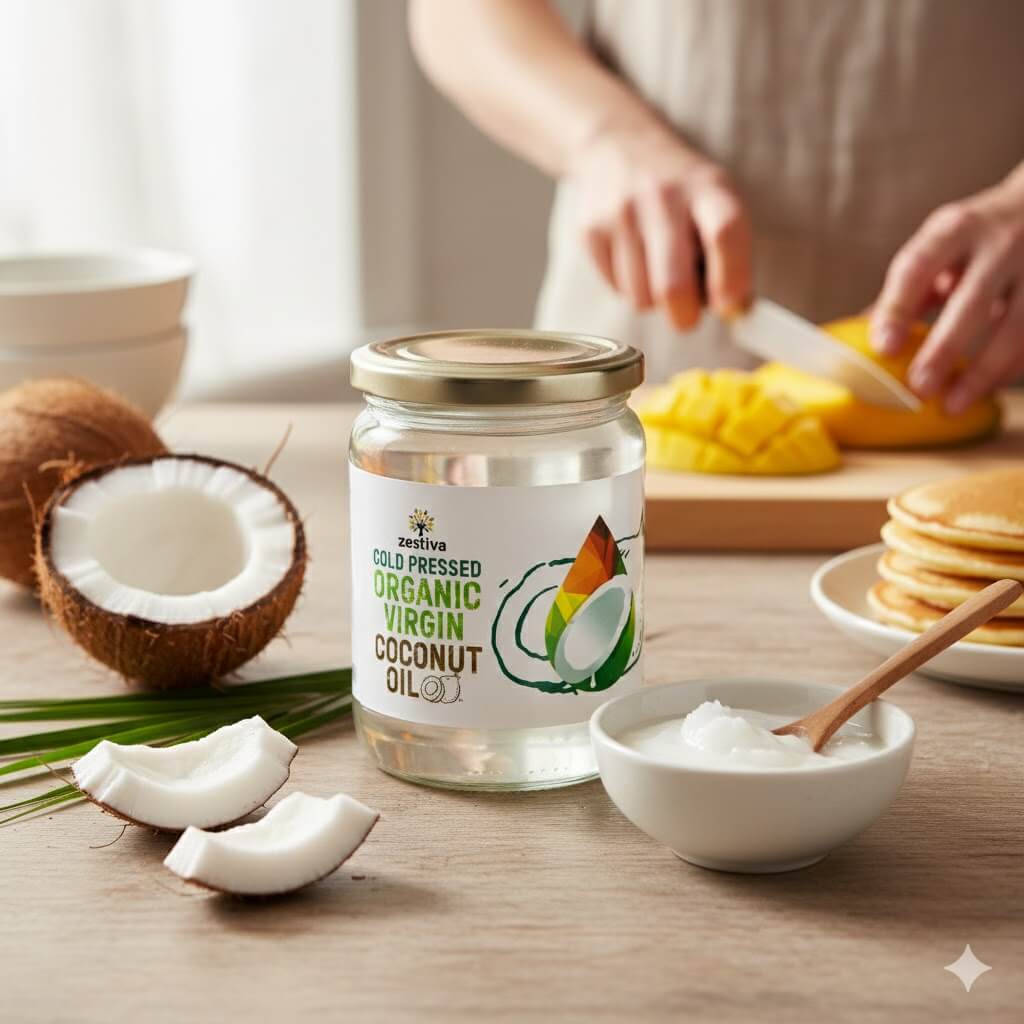
Cold-pressing involves using a mechanical press to squeeze the oil out of dried coconut flakes or fresh meat.
- The Process: While called “cold,” the friction of the press can still generate some heat (up to 49°C or 120°F).
- The Result: A great, healthy oil with a traditional coconut scent and flavor. It’s perfect for cooking and baking.
2. Centrifuge Extracted Coconut Oil (The Premium Choice)
Centrifuged oil is widely considered the purest form of coconut oil available in 2026.
- The Process: Fresh coconut milk is placed in a high-speed machine that spins at thousands of rotations per minute. This force separates the oil from the water and proteins instantly, without any heat at all.
- The Result: Because it’s never heated, it retains up to 4x more antioxidants and more Lauric Acid than cold-pressed oils. It has a much lighter, milder taste and a silkier texture.
Comparison at a Glance
| Feature | Cold-Pressed Virgin | Centrifuged Virgin |
| Heat Exposure | Minimal (Friction heat) | Zero Heat |
| Nutrient Level | High | Highest (Raw) |
| Flavor | Strong Coconut | Mild & Delicate |
| Texture | Standard | Ultra-Smooth/Light |
| Best For | Cooking & Baking | Raw consumption, Smoothies, Skincare |
Which One Should You Choose?
- For the Kitchen: If you love that rich coconut aroma in your stir-fries or cookies, Cold-Pressed Virgin Coconut Oil is a fantastic, cost-effective choice.
- For Maximum Healing: If you are using oil for oil pulling, adding to morning coffee/smoothies, or as a luxury skin moisturizer, Centrifuged Coconut Oil is the winner. Its “raw” status means the enzymes and medium-chain triglycerides (MCTs) are completely intact.
Why Zestiva Organic?
At Zestiva, we don’t just put “Extra” on the label for show. Whether you choose our traditional Cold-Pressed or our Raw Centrifuged oil, you are getting organic, non-GMO, and ethically sourced products that prioritize your cellular health.
[Shop our Raw Centrifuged Coconut Oil – The Purest Choice]
[Shop our Cold-Pressed Virgin Coconut Oil – The Kitchen Essential]