For anyone committed to a clean-label, nutrient-dense diet, standard white rice and heavily
processed grains have long been replaced by superfoods. At the top of that list sits quinoa.
As a complete plant-based protein containing all nine essential amino acids, it has become
an absolute staple in wellness pantries worldwide.
But walk down the health food aisle or browse online, and you’re immediately faced with a
choice: Do you buy standard white quinoa, or do you opt for the vibrant, multi-colored
tricolour blend?
Many commodity food brands and high-volume wholesalers treat these varieties as purely
aesthetic choices—a way to make your dinner plate look a bit more colorful. However, when
it comes to functional nutrition and culinary texture, the differences between these grains
run much deeper than skin deep. Let’s break down the distinct structural profiles of white
versus tricolour quinoa so you can make the absolute best choice for your personal health
goals and weekly meal prep routine.
The Seed Structure: Why Color Equals Cellular Protection
To understand the difference between these varieties, we have to look at the outer layer of
the seed, known as the bran.
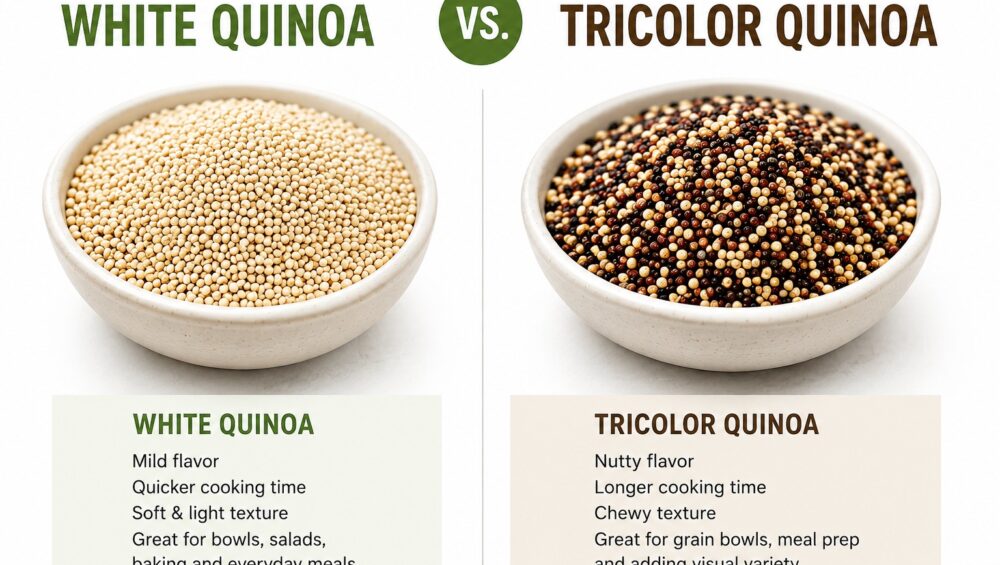
White quinoa has had its outer hull slightly more polished, which removes the intensely
earthy notes and results in a lighter, faster-cooking grain. Red and black quinoa seeds, which
make up the bulk of a premium tricolour blend, retain their dark, robust outer hulls entirely.
In nature, those dark pigments are a visual indicator of powerful plant compounds called
anthocyanins and flavonoids. These are the exact same class of cell-protecting antioxidants
found in dark berries and wild rice. When you choose a high-quality tricolour blend, you are
Article 1 (Publish Tuesday Morning): Focuses on the nutritional differences, targeting
consumers researching the health values of different quinoa types.
Article 2 (Publish Thursday Morning): Focuses on practical meal prep efficiency,
directly driving conversions toward your large 700g and 1.3kg value packs.
integrating a much broader spectrum of polyphenol antioxidants into your diet, helping your
body combat systemic oxidative stress and inflammation at a cellular level.
Macronutrient Breakdown: Sizing Up the Stats
When evaluating is white or tricolor quinoa healthier , a look at the macro profile
reveals why both versions easily outperform traditional starches, though tricolour edges
ahead for specific wellness goals:
Textural Profiles: Matching the Grain to Your Dish
Beyond the pure laboratory science, how these grains behave in your kitchen should dictate
your buying choices:
White Quinoa: The Ultimate Smooth Comfort Food
Because it lack the tough outer seed coat, white quinoa cooks down into a beautifully light,
neutral, and pillowy texture. It acts like a sponge for flavors, absorbing broths, dressings, and
spices effortlessly. If you have sensitive digestion, or if you are looking to seamlessly
transition your family away from white rice without triggering complaints about a “heavy”
texture, pure white quinoa is your ideal entry point.
Tricolour Quinoa: The Earthy, Meal-Prep Champion
Tricolour quinoa refuses to turn mushy. The red and black seeds hold their distinct structural
shape even after being boiled and stored in the fridge for days. It delivers a satisfying,
distinctly nutty crunch and an earthy flavor profile. This structural resilience makes it the
absolute best high protein grains for meal prep structures, particularly for cold
Mediterranean salads, grain bowls, and side dishes that need to stand up to heavy dressings
without breaking down.
The Verdict: Which Belongs in Your Pantry?
If your priority is a light, crowd-pleasing side dish that perfectly mimics the fluffiness of rice,
pure white quinoa is a flawless, clean-label choice. But if you are a dedicated meal-prepper,
athlete, or functional-health enthusiast looking to maximize your daily fiber, iron, and
antioxidant intake, a premium tricolour blend is structurally superior.
Regardless of the color you choose the key to avoiding bitter flavors and optimizing
digestion lies in ensuring your superfoods are thoroughly pre-washed to remove saponin (a
natural, bitter plant coating) and sourced from trusted organic origins.
Protein Profile: Both white and tricolour quinoa are complete proteins. They deliver
roughly 6 to 7 grams of complete plant protein per cooked cup, loaded with lysine and
isoleucine to support lean muscle recovery.
Dietary Fiber: Because tricolour quinoa includes the intact hulls of red and black
seeds, it delivers a slightly higher fiber content per serving. This makes it an
exceptional tool for stabilizing blood sugar levels and promoting long-term satiety.
Micronutrients: The darker seeds within the tricolour blend carry naturally higher
concentrations of non-heme iron and magnesium, minerals essential for cellular
oxygen transport and nervous system function.
[ Explore Zestiva’s Organic Superfood Grain Collection — Sourced for Purity